https://doi.org/10.24265/liberabit.2026.v32n1.1260
Character Strengths and Adolescent Mental Health: Moderated-Mediation by Strengths Use and Mindset
Fortalezas del carácter y salud mental adolescente: mediación moderada por el uso de fortalezas y la mentalidad
Anam Rafiquea,*
https://orcid.org/0009-0009-1172-5246
a National University of Sciences and Technology, Pakistán
Correspondencia: anam.phdp19s3h@student.nust.edu.pk
Tamkeen Ashraf Malika
a National University of Sciences and Technology, Pakistán
tamkeen.ashraf@s3h.nust.edu.pk
Recibido: 10 de diciembre de 2025
Aceptado: 25 de abril de 2026
Para citar este artículo:
Rafique, A., & Malik, T. A. (2026). Character Strengths and Adolescent Mental Health: Moderated-Mediation by Strengths Use and Mindset. Liberabit, 32(1), e1260. https://doi.org/10.24265/liberabit.2026.v32n1.1260
Abstract
Background: Adolescent mental health is a critical area of investigation due to the heightened vulnerability, heightened neurodevelopmental plasticity, and lasting imprints of this developmental stage on later life. Objective: This research aims to study adolescent mental health from a strength-based perspective by examining the complex interplay between character strengths and their use among strength-based mindset groups (Fixed vs. Growth). Method: The study participants included 500 school-going adolescents (aged 13-17 years) recruited through a multi-stage cluster random sampling. Distinct patterns of moderated-mediation pathways were analyzed using multi-group path analysis through AMOS 23.0. Results: Findings revealed that Humanity and Justice had significant indirect effects on mental health via strength use, in the fixedmindset group, where they both predicted higher well-being (βHumanity = .14*; βJustice = .07*) and lower behavioral problems (βHumanity = -.09*; βJustice = -.04*). In contrast, the indirect effects of most virtues, including Wisdom (β = .18***), Transcendence (β = .10**), Justice (β = .05*), and Temperance (β = .05*), were statistically significant in the growth-mindset group, but only towards promoting well-being. Conclusion: These findings highlight the need for strength-based interventions that go beyond awareness towards active strengths use while adhering to the underlying mindset of adolescents to maximize their effectiveness and applicability.
Keywords: adolescent mental health, character strengths, strengths use, strength-based mindset, moderated-mediation, well-being, behavioral problems.
Resumen
Antecedentes: la salud mental adolescente es un área crítica de investigación debido a la mayor vulnerabilidad, la plasticidad y las huellas duraderas de esta etapa del desarrollo. Objetivo: este estudio examinó la salud mental de los adolescentes desde una perspectiva basada en fortalezas, analizando la interacción de las fortalezas de carácter y el uso de fortalezas entre los grupos de mentalidad fija y de crecimiento. Método: participaron 500 adolescentes escolarizados (entre 13 y 17 años), reclutados mediante muestreo aleatorio por conglomerados en múltiples etapas. Para explorar los patrones de mediación, se aplicó en AMOS 23.0 un análisis de rutas multigrupo. Resultados: en el grupo con mentalidad fija, la humanidad y la justicia mostraron efectos indirectos significativos sobre la salud mental a través del uso de fortalezas, prediciendo mayor bienestar (βhumanidad = .14*; βjusticia = .07*) y menos problemas conductuales (βHumanidad = -.09*;βjusticia = -.04*). En el grupo con mentalidad de crecimiento, losefectos indirectos de varias virtudes incluida la sabiduría (β =.18***), trascendencia (β = .10**), justicia (β = .05*), y templanza (β = .05*) fueron significativos, aunque únicamente en la promoción del bienestar. Conclusión: los hallazgos destacan la necesidad de intervenciones basadas en fortalezas que fomenten el uso activo de estas, y para maximizar su efectividad y aplicabilidad se deben adaptar a la mentalidad subyacente de los adolescentes.
Palabras clave: salud mental adolescente, fortalezas de carácter, uso de fortalezas, mentalidad basada en fortalezas, mediación moderada, bienestar, problemas conductuales.
Introduction
Adolescence is a critical developmental period as it is characterized by diverse biopsychosocial transitions. The rapid changes occurring at this life- stage not only bring opportunities for growth but also increase the vulnerability of this population towards mental health difficulties. Epidemiological studies also suggest that most psychopathologies first emerge at age 14; though remain undiagnosed until later in life (Solmi et al., 2022). This evidence signifies the need for preventive efforts tailored to the exclusive needs of adolescents for improving their quality of life and reducing overall burden of disease.
Amid rising global concerns regarding adolescent mental health, the focus of research and practice has steadily shifted from a deficit-based to strength-based outlook. This shift in perspective has focused both on the prevention of mental health issues and promotion of positive outcomes such as well-being, resilience, and flourishing (Duan et al., 2020; Mayerson, 2020; Vázquez & Chaves, 2016). Studying adolescents from a strength-based perspective provides a holistic understanding of this population by focusing on the existing resources for promoting their healthy development (Buchanan, et al., 2023; Charabin, et al., 2023). These strength-based models become particularly relevant, in the context of Lower- and Middle-Income Countries (LMIC) like Pakistan as adolescents are not only vulnerable to their age- related challenges but additionally exposed to a number of factors like academic, family and financial stressors (Fatima, et al., 2025; Qadeer et al., 2025). This poses serious mental health related constraints, for which there is limited access (Ghazal, 2022).
Latest evidence from Pakistan has shown a shift in the focus of research towards understanding the protective factors in addition to associated risks for mental health outcomes. This growing body of research highlights various protective factors, such as resilience, hope, and gratitude that leads to better life satisfaction, emotional regulation and well-being (Ali, et al. 2022; Khawar et al. 2025; Mukhtar et al., 2025; Panhwar & Malik 2023; Saleem et al. 2020). Findings of these studies suggest that putting focus on the strengths, especially inner strength, can create opportunities for development and growth, regardless of the limitations and challenges around.
In view of strength-based perspective, character strengths have been recognized as a central pillar of positive youth development, with evidence suggesting that their activation and application can significantly enhance well-being and buffer against internalizing and externalizing problems (Lavy, 2020; Niemiec, 2020). However, this evidence base largely stems from Western population, thus leaving a need to understand underlying process and manifestation of these protective factors in cultural context of Pakistan where social setup is mostly collectivistic.
Character strengths and mental health
Character strengths, as conceptualized by the Values in Action (VIA) framework (Peterson & Seligman, 2004), refer to the positive traits reflected in an individual’s thoughts, feelings, and behaviors that are morally valued and contribute to individual and communal well-being. VIA classification is the result of extensive efforts by 55 scientists over a three-year period involving review of more than 200 works; resulting in 24 strengths organized under six universal virtues: wisdom incorporating cognitive strengths, courage including emotional strengths, humanity including interpersonal strengths, justice comprising civic strengths, temperance containing moderating strengths, and transcendence including spiritual strengths (Niemiec, 2018).
Empirical evidence has consistently shown that character strengths play a vital role in mental health related outcomes where it tends to promote well- being on one end while acting as a protective factor for mental health difficulties on the other (Niemiec, 2020). Studies have found that certain character strengths, particularly heart strengths like love, zest, hope, and gratitude, are strongly associated with subjective well-being and act as bridge connecting to mental health outcomes (Blasco-Belled, 2022; Zhang & Chen, 2018). The research is still pacing up in Pakistan around this domain, with encouraging developments. Study by Rashid and Najam (2023) found that bravery, zest, and perspective are with increased psychological well-being among adolescents with physical disabilities. Another study highlighted that strengths such as self-regulation, prudence, hope and courage were associated with adolescents’ subjective well-being (Vohra & Pandey, 2020). The findings of these studies suggest that character strengths are not only limited to the western cultures, rather it is equally relevant in Pakistani context. However, the need to study the impact and underlying mechanism of character strengths and virtues on overall mental health of adolescents remains a major need.
Strength use as a mediator
While existing research has repeatedly suggested the relationship between character strengths and virtues with positive outcomes, many studies have emphasized the importance of active strengths use in routine life in addition to mere possession to have significant impact on the manifestation of these outcomes (Douglass & Duffy, 2015; Govindji & Linley, 2007; Wood et al., 2011). Strength use can be defined as intentional and active application of strengths in daily life (Wood et al., 2011). Strength use is an underlying mechanism that connects personal virtues with well-being outcomes (Kern et al., 2016). According to Niemiec (2020) though the optimal use of strengths has an overall positive impact, however underuse or overuse can lead to problems instead of any beneficial outcomes. In adolescents, strength use has been found to predict higher well- being and school engagement while mitigating behavioural and emotional problems (Lavy, 2020; Shoshani & Slone, 2020; Zhang & Chen, 2018).
Latest studies have conceptualized strength use as mediating mechanism, a pathway through which individual assets translate into positive outcomes including academic achievement, job satisfaction, and life satisfaction across adult and youth (Duan et al, 2020; Harzer & Ruch, 2013; Jach et al., 2018). Despite these advances, two significant gaps remain in existing literature. Firstly, little research has been conducted in non-Western, collectivist contexts, where the expression and value of character strengths and thus the process of their use may differ significantly due to sociocultural norms (Hofstede Insights, 2023; Rafique & Malik, 2024; Rashid & Seligman, 2018). Secondly, strength use could not operate in a vacuum and there exists a need to study the underlying conditions such as person’s attitude, beliefs and mindset about his/her strengths, which influence the extent of one’s strength use.
Strength-based mindset as moderator
Strength-based mindset is a phenomenon which draws from Dweck’s (2006) mindset theory, differentiating between a fixed mindset (belief that traits are stable) and a growth mindset (belief that traits can be developed). Applying this to the domain of strengths, Jach et al. (2018) introduced the concept of a strength –based mindset–a belief system about the malleability of one’s psychological strengths. It implies that one’s beliefs about whether the strengths are fixed or can grow over time may influence whether and how these strengths are being used in daily life.
Biswas-Diener and his colleagues (2011) suggested that different approaches to strengths development can result in fixed or growth mindsets about strengths where some may see their strengths as a fixed entity that they are born with, while others may think of them as dynamic process that can be altered with practice. They further suggested the implication of the strength-based mindset by highlighting that individuals with a fixed mindset might label their strengths as stagnant and use them only in limited ways while devoting less time trying to develop any strength (through use) because they see it as something that cannot be changed (Biswas-Diener et al., 2011). On the other hand, those with a growth mindset may be more likely to use their strengths more often and in more diverse ways. However, this theoretical perspective has not been empirically tested in many studies. Jach and colleagues (2018) conducted a study in this regard to assess the moderating role of mindset between strength-based parenting and strength use. Their findings suggested that adolescents who see their parents as strength- based report greater strengths use (especially when they have a growth mindset about their strengths) and greater subjective well-being. Adolescents who believe that strengths can be learned and nurtured are more likely to actively use them, even when facing setbacks; however, empirical evidence exploring how strength- based mindset moderates the impact of strength use on mental health outcomes remains limited, especially in non-Western cultures.
This study, henceforth, examined this complex interaction of character strengths, their use and the differences based on the strength-based mindsets (fixed vs growth) collectively influencing the mental health outcomes (Figure 1). This conceptualization is in line with the Positive Youth Development framework (PYD) which suggests that working on existing resources and assets could lead to thriving and positive development among youth (Lerner et al., 2005). This study has adopted the dual-factor model (Greenspoon & Saklofske, 2001) for conceptualizing mental health outcomes incorporating both components of well-being and behavioral/emotional problems to generate a holistic insight about adolescent mental health.
Figure 1
Conceptual diagram of the moderated mediation model of study
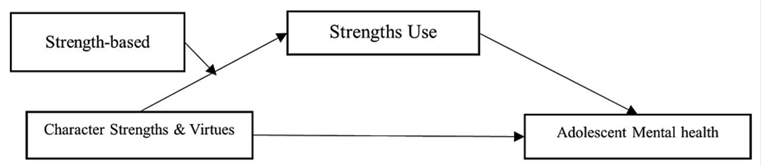
Present Study. Evidence suggests that character strengths have inherent universality due to their cultural applicability and relevance (Park, et al., 2006), but the manifestation of these strengths have contextual dependence (Brown, et al., 2020; Snow, 2019). In addition to the above-mentioned gaps in literature, there exists a limited availability of studies on character strengths in Pakistani context, though the evidence is growing but most studies have mainly been conducted on adult population at workplace and university setting (Anjum & Amjad, 2020; Green, 2022; Mubashar & Harzer, 2023; Ramzan, et al., 2022; Zubair, et al., 2018).
One recent study on trends of character strengths among Pakistani adolescents have highlighted interesting pattern while indicating the top five prevalent strengths including Appreciation of Beauty and Excellence, Love, Hope, Creativity, and Love of Learning whereas Humility, Self-regulation, Fairness, Zest, and Honesty as the lowest prevalent strengths among the participants (Rafique & Malik, 2024). Though, these findings imply the relevance and unique presentation of character strengths in Pakistani context more research is still needed to gain a comprehensive understanding about the phenomenon specifically in terms of its antecedents and outcomes. Beyond patterns of strengths there exists a scarcity of research in Pakistan, particularly about the strength use (Rafique & Malik, 2024) and investigation of these dynamics considering strength-based mindset groups. One recent study by Iqbal et al. (2021) has investigated the mediating role of mindset on influence of school engagement and resilience on subjective well-being of Pakistani adolescents (Iqbal et al., 2021) but it has conceptualized mindset in terms of intelligence and strengths-based mindset has not been studied exclusively in our context. Concisely, existing empirical evidence highlights direct associations of strengths and mental health outcomes; however, there remains a need to explore the process of how strengths function, and under what conditions they translate into psychological benefits.
The study address this gap by studying the pathways through which influence of adolescents’ character strengths translates into mental health outcomes. It has not only focused on possession of strengths rather also on the extent of their use and extends to studying the influence of underlying mindset about strengths further impacting these influences. Therefore, the key objectives of current research were to study the effect of Character Strengths on mental health outcomes among adolescents and to study the role of strength use and strength-based mindset in the strength and direction of this effect. To study these objectives, the hypotheses tested in this study were extended to the exploration of mediation and moderation mechanisms. It was hypothesized that character strengths and virtues will have significant direct effects on adolescent well- being and emotional/behavioral problems (Lavy, 2020; Niemiec, 2020) which will be significantly be mediated by their strengths use (Douglass & Duffy, 2015; Govindji & Linley, 2007; Wood et al., 2011) and moderated by their strength-based mindset presuming that adolescents with a growth mindset will show greater strength use and better mental health outcomes than those with a fixed mindset (Jach et al., 2018; Yeager & Dweck, 2020).
Method
Design
This study had correlational research design conducted through cross-sectional survey method. This design was best suitable to meet the research objectives in a time-efficient manner within naturalistic setting without any manipulation. The data was collected from July to Sep 2023 through group administration of adolescent-reported measures. Data was collected in classroom settings directly by the researcher ensuring consistency and reducing any potential biases in the data collection process.
Participants
Sample Size Estimation. Sample size for this study was estimated using Soper’s (2023) SEM sample size calculator which suggested minimum requirement of 100 participants based on complexity of the model. Sample Size the final sample of the study consisted of 500 school-going adolescents significantly exceeding the estimated size to maximize the statistical power of the study.
Inclusion and Exclusion Criteria. The inclusion criteria of the study included adolescents aged 13 to 17 years who were enrolled full-time in the selected schools having parental consent and personal assent. Exclusion Criteria included differently abled children.
Sampling Procedure. Multi-stage cluster random sampling (Figure 2) was used to recruit participants to increase the rigor of the study. It helped in ensuring population diversity and minimizing selection bias within school setting (Sedgwick, 2014). Keeping in view the structured and hierarchical nature of the school system, cluster sampling allowed for efficient data collection across multiple sites while maintaining randomness (Bryman, 2016).
Recruitment Site. The semi-government school system was selected because of its uniformity in quality of education ensured through a centralized curriculum and standardized policies across branches. This school system offers a balanced mix of two existing educational systems in Pakistan including public-sector and private sector schools which has a lot of disparity in terms of their curriculum and educational standards. Rawalpindi and Islamabad (collectively referred as twin cities) were selected as the recruitment sites due to the dense concentration of selected schools in this region (over 30 schools) along with the most educated and school going population among 5 to 16 years in Islamabad (86%) and Rawalpindi (82%) according to Pakistan Bureau of Statistics - PBR (2023).
Sample Characteristics. The sample characteristics of this study, as depicted in Table 1, showed that participants (N = 500) represented the secondary to higher secondary student population (aged 13-17years) with predominant ethnic representation of Punjabis (24%) followed by Pashtuns (22%) aligning well with the sociocultural context of the Pakistani population and twin cities. Islamabad being the capital of Pakistan with Rawalpindi being a close associate are one of the most literate and urbanized regions of Pakistan reflected in familial structure of the participants with predominant nuclear family structures (71%), well-educated parental background (60% Fathers and 50% Mothers holding graduation degree) with an average of three siblings and family income around 1-3lacs indicating a middle-class profile. The correlation statistics showed significant negative relationship of age and class with mental health outcomes, where age had a negligible to weak negative association with overall well-being (r = -.01) and problems (r = -.19) and class had small negative relationship with both outcomes (r = -.13 to -.21). Additionally, among familial factors, mother age showed significant yet weak negative association with overall problems (r = -.12) whereas joint family system and parent unavailability showed significant positive relationship with overall problems though these effects were also negligible to weak (r = -.10; r = -.10, respectively) (see Table 1.)
Figure 2
Participant recruitment process
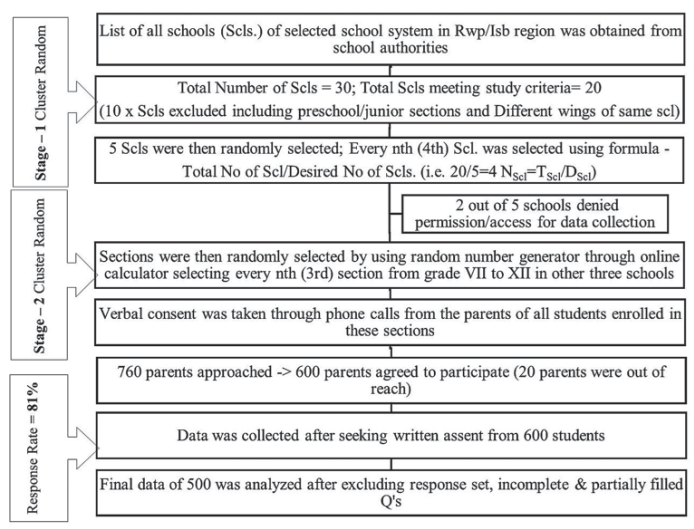
Table 1
Descriptive characteristics of the participants and their correlation with outcome variables
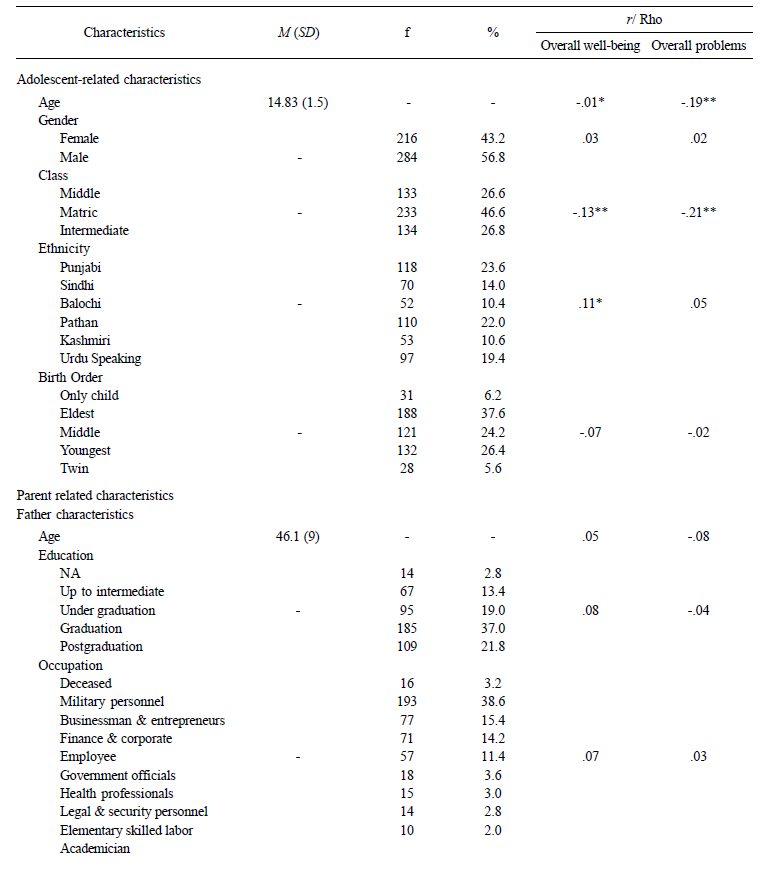
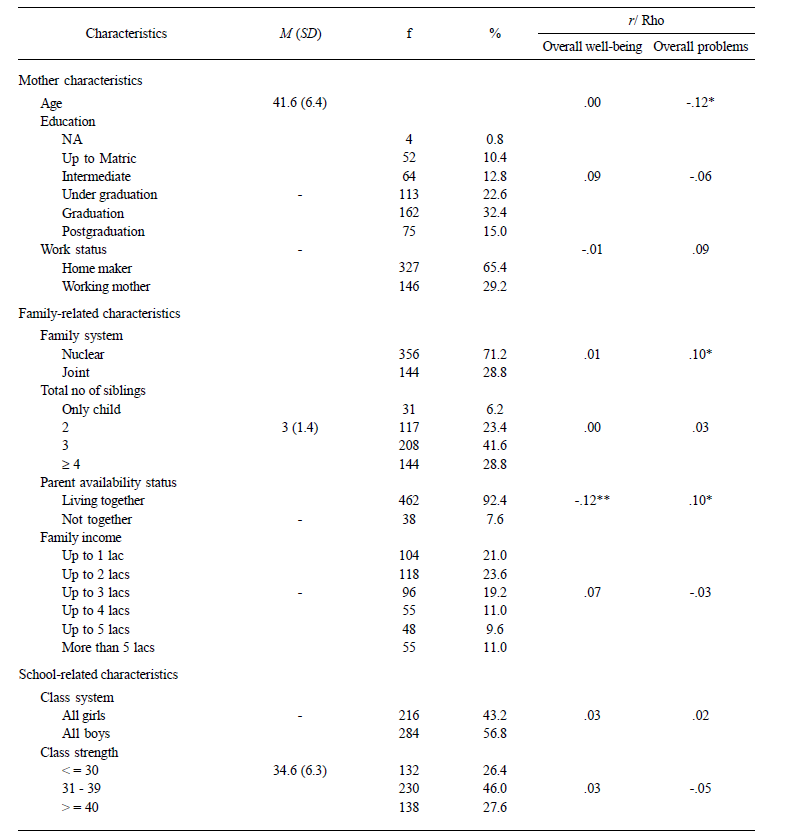
Note. ***p < .001; **p < .01; *p < .05
Instruments
We used a battery of 160-items, taking 15-20 minutes for completion, comprising of the following adolescent-reported measures in addition to the demographic sheet in this study to assess the domains of interest:
VIA Inventory of Strengths for Youth-Revised - VIA YR2 (Jermann & McGrath, 2022). VIA Youth Survey, specifically revised for ages 13-17 years, was used in this study to assess the character strengths of the adolescents. This 98-item self-report measure is based on the VIA classification of strengths (Peterson & Seligman, 2004). It uses a 5-point scale to measure the degree to which respondents endorse statements about their 24-character strengths (i.e., 1 = not at all like me to 5 = very much like me). The measure yields separate composites for 24 strengths which are then grouped into six core virtues. The original scale has demonstrated internal consistency ranging from .58 to .87 with one subscale showing the α value below accepted criteria i.e. .70 (VIA Institute of Character, 2026). Regardless, this scale was used in current study as it remains a widely used and theoretically grounded measure of character strengths among youth (Cheng et, al., 2022; Gülbahar & Sari; 2022; Ratnasari, 2023; Wagner & Ruch, 2023; Walker et al., 2023). Additionally, the Urdu Adapted version of the scale used in this study showed satisfactory psychometric properties with α ranging from .74 to .89 for all subscales.
Strength Use Scale - Urdu Version (Rafique & Malik, 2024). Adolescent’s strengths use was assessed using the Strengths Use Scale (SUS) originally developed by Govindji and Linley (2007) and Wood et al. (2011). This 14-item unidimensional scale asks about the extent to which people use their strengths in daily life on a 7-point Likert-type scale. The adapted version of this scale in Urdu language has been used in this study which showed good internal consistency (α = .91).
Mindset Scale (Jach et al., 2018). Strength-based mindset was assessed using the strength-based Mindset scale adapted by Jach, et al, (2018) from the implicit person scale (Dweck et al., 1995) with inter- item correlation > .6. Participants responded to Urdu version of this 3-item scale, on a 7-point Likert type scale ranging from strongly disagree to strongly agree.
Epoch Measure of Well-being (Kern et al., 2016). Well-being was measured by Urdu adaptation of EPOCH measure consisting of five subscales including engagement, perseverance, optimism, connectedness, and happiness. The scale is developed based on PERMA theory of well-being (Seligman, 2011). Across five domains, each item is scored on a 1 to 5-point Likert scale (almost never/ not at all like me = 1; almost always/ very much like me = 5). The scale showed high internal consistency with alpha coefficient ranging from .78 to .88 (Kern et al., 2016; Maurer et al., 2021; Zeng & Kern, 2019). Urdu adaptation of the scale has been used in this study where overall score of well- being was used by summing up all subscale composites to reduce the structural complexity of the model and collectively assess the impact on overall well-being.
Strengths and Difficulties Questionnaire (SDQ). SDQ originally developed by Goodman (1997) is a widely used 25-items screening tool for mental health problems among children and adolescents. It assesses the internalizing and externalizing problems and generates an overall problems score based on 3-point scoring for each item (0 = not true; 1 = somewhat true; 2 = certainly true). The items of this measure tap onto emotional symptoms, conduct problems, peer problems, hyperactivity and prosocial behavior. Urdu version of SDQ has been used in this study which had acceptable internal consistency i.e. α = .91 (Essau et al., 2017).
Procedure
Before conducting this study, ethical approval was obtained from the Ethical Review Board of the researcher’s affiliated institute. Data was then collected through group administration of adolescent reported measures after seeking approval from the school authorities and verbal consent from the parents. Students whose parents gave their consent were then approached to seek written assent for participation. They were informed about the limits of confidentiality and their right to withdraw at any stage without any repercussions. The researcher collected data from each school through multiple visits depending upon the availability of students. At the end of each session, participants were provided with a referral for free telephonic and/or in-person counseling services in case of any emotional distress caused during data collection process.
Data analysis
Data was analyzed using SPSS 27.0 and AMOS version 23.0. Firstly, data cleaning was conducted to rectify any structural errors, response set, and missingness. Descriptive analyses were done, and the assumptions of normality were tested through visual inspection of histogram and examining values of skewness/kurtosis. Correlation statistics including Pearson Product Moment Correlation for continuous variables and Spearman Rho for categorical variables were then used to assess the relationship of mental health outcomes with demographic characteristics and other study variables. Multiple regression was conducted to see the effect of demographic characteristics on mental health outcomes so that significant factors can be further controlled/included in advance model testing. For model testing, AMOS
23.0 was used to assess the moderating effect of strength-based mindset on the indirect effects of character strengths and virtues on adolescents’ mental health outcomes via strength use. This model was tested using Multi-group Path Analysis in AMOS, with adolescents being categorized into two groups, i.e., Fixed Mindset group (n = 105) and Growth Mindset group (n = 395) groups. These groups were coded dichotomously (1 = Fixed Mindset; 2 = Growth Mindset). All predictors were modeled using subscale- level composite scores to retain theoretical richness while maintaining statistical simplicity. Goodness of model fit was assessed using multiple indices as suggested by Little (2013). including Comparative Fit Index (CFI), Tucker-Lewis Index (TLI) with acceptable criteria > .90 and Root Mean Square Error of Approximation (RMSEA) with acceptable criteria < .08
Results
Data cleaning and Normality Assumptions
Initial data screening conducted for identification of any potential errors, missing values or response sets resulted in 500 cases finalized with minimal missingness (< 1%) and no potential outliers. The data met the normality assumptions (as the values of skewness and kurtosis for all study variables fall within acceptable ranges of ±2 (Skewness: -.48 to .19; Kurtosis: -.74 to .81). No potential issues regarding other assumptions of multicollinearity, linearity and homoscedasticity were found in these cases.
Descriptive and Correlation Statistics
Descriptive statistics shows trends of core virtues with Wisdom (M = 18, SD = 2.81) and Transcendence (M = 18.3, SD = 2.7) being the highest endorsed virtue followed by Courage (M = 13, SD = 2.0); Temperance (M = 12.62; SD = 1.8); Humanity (M = 10.6; SD = 1.7) and Justice (M = 9.83, SD = 1.5). For overall well-being participants had Mean value of 17.13(3) and overall behavioral/emotional problems had mean score 16.3(6.5) Pearson Product Moment Correlation indicated moderate to stronger correlations among strength related variables and mental health outcomes. As indicated in Table 2. Strength use showed the strongest positive relationship with well-being (r = .73) and substantial shared variance (R2 = .53) with it followed by spiritual strengths (r = .57) and cognitive strengths (r = .55) indicating meaningful yet moderate level of shared variance among these variables with adolescent well-being. On contrary, behavioral and emotional problems showed significant negative relationship with all variables revealing smaller to moderate effect (r = -.16 to -.31) of these variables on reducing mental health problems. Shared variance among these variables with behavioral problems also seemed smaller in size with for these variables. Among virtues, interpersonal strengths (humanity) shared most variance (R2 = .10) while cognitive strengths shared the least variance (R2 = .03) with behavioral problems. Overall, the pattern of results indicates that higher strengths and strength use are consistently associated with better well-being and fewer behavioral and emotional difficulties with varying level of effect on these outcomes.
Table 2
Pearson product moment correlation among study variables (N = 500)
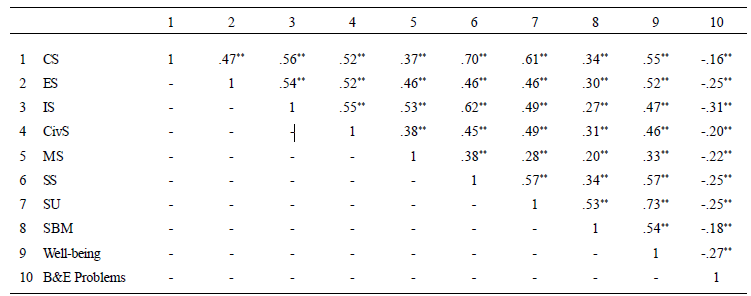
Note. p < .001, CS = Cognitive Strengths, ES = Emotional Strengths, IS = Interpersonal Strengths, CivS = Civic Strengths, MS = Moderating Strengths, SS = Spiritual Strengths, SU = Strength Use, SBM = Growth/Fixed Mindset, Well-being, B&E Problems = Behavioral and Emotional Problems.
Multiple regression
Multiple regression analysis was conducted to analyze the contribution of demographic and strength-related factors to adolescent mental health. The regression models predicting well-being and overall problems were both significant, i.e., well-being: F (12, 487) = 67.5, p < .001; overall problems: F (13, 463) = 8.21, p < .001. These models explained 61.5% variance in well-being and 18% variance in behavioral/ emotional problems. The results showed insignificant effects of all demographic characteristics on both mental health outcomes (Age: βWell-being = .01, βPblm =
-.07; Class: βWell-being = -.09, βPblm = -.13; Parental Availability Status: βWell-being = -.02; βPblm = .02; Family System: βPblm =.02; Ethnicity: βWell-being =.02; Mother Age: βPblm = -.88; p > .05) indicating that these factors had minimal role in shaping adolescent well-being or problems in the context of study population. In contrast, strength-related factors significantly predicted mental health outcomes such that cognitive strengths (Wisdom: β = .16) and interpersonal strengths (Humanity: β = -.20) significantly predicted behavioral/ emotional problems whereas emotional strengths (Courage: β =.16) and spiritual strengths (Transcendence: β = .16), strengths use (β = .39) and strengths based mindset (β = .21) strongly predicted well-being. These findings highlight the significant contribution of strength related factors above and beyond demographic influences and suggest that demographic factors were not strong determinants of mental health in our sample.
Moderated Mediation Analysis
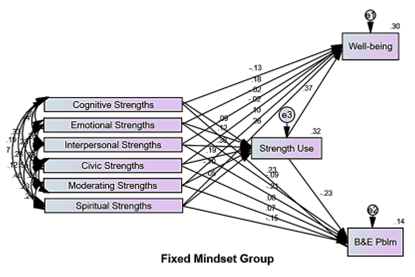
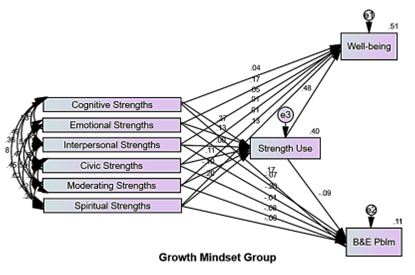
A multi-group path analysis was conducted in AMOS.23.0 to assess the moderated-mediation model. It examined the extent to which character strengths and virtues predicted adolescent mental health directly and indirectly through their strengths use, and whether these relationships differed between the fixed versus growth mindset groups. A chi-square difference test was conducted which indicated a significant difference between the unconstrained model (χ² (2) = 4.79, p = .09) and the constrained model (χ ² (13) = 54.13, p < .001), with Δχ ² (11) = 49.34, p < .001. This suggested that path estimates differ significantly across mindset groups, confirming the moderating effect of mindset. The model fit indices indicated an excellent fit (CFI = .99; TLI = .94; IFI = .99; CMIN/DF < 3; RMSEA = .05) indicating that the model accounted for maximum variance in the data.
The results as shown in table 3 revealed significant direct effects of two core virtues on adolescents’ wellbeing such that Courage (Growth: β = .17, p < .001; Fixed: β = .18, p = .05) and Transcendence (Growth: β = .13, p = .02; Fixed: β = .26, p = .01) positively predicted Well-being in both mindset groups. On contrary, Humanity (Growth: β = -.20, p = .00) and Wisdom (Growth: β = .17, p = .02) showed significant direct effects for behavioral/ emotional problems in growth mindset group only. Specifically, the direction of these effects showed that Humanity negatively predicted behavioral/emotional problems whereas Wisdom positively predicted overall problems in the growth-mindset group. The mediating variable-strength use also significantly predicted Well- being in both groups, but more strongly in the Growth Mindset group (Growth Mindset: β = .49, p < .001; Fixed Mindset: β = .38, p < .001). For overall behavioral/emotional problems, strength use had a significant negative effect only in the Fixed Mindset group (β = –.23, p = .03).
Considering the mediating role of strengths use, most virtues appeared to have a significant indirect effect on mental health outcomes except humanity and temperance (Wisdom: β = .14, 95% CI [.05, .28],p < .05; Courage: β = .14, 95% CI [.05, .28], p < .05; Transcendence: β = .07, 95% CI [.01, .16], p < .05 and Justice: β = .07, 95% CI [.01, .16], p < .05) by promoting well-being and lowering overall behavioral and emotional problems (Wisdom: β = .14, 95% CI [.05, .28], p < .05; Courage: β = .14, 95% CI [.05, .28], p < .05; Transcendence: β = .07, 95% CI [.01, .16], p < .05 and Justice: β = .07, 95% CI [.01, .16], p < .05). When these indirect effects were specifically examined in mindset groups, notable group-specific patterns were observed.
In fixed mindset group, only Humanity and Justice appeared as significant predictors. They both predicted higher well-being (Humanity: = .14, p < .05; Justice: β = .07, p < .05) and lower behavioral and emotional problems (Humanity: β = -.09, p < .05; Justice: β = -.04, p < .05) mediated through strengths use of adolescents. These findings imply that relationship- oriented virtues translate into better mental health outcomes primarily with their active use in daily life for adolescents with fixed mindsets. In comparison, for the growth mindset group, the indirect pathways from Wisdom (β = .18, p = .000), Transcendence (β = .10, p = .002), Justice (β = .05, p < .05), and Temperance (β = .05, p < .05) were statistically significant towards well-being through strengths use. However, none of the six virtues showed significant indirect effect on reduction of behavioral and emotional problems in this group. These findings highlight that for adolescents with the growth mindset; virtues tend to contribute to mental health outcomes by promoting well-being when actively engaged and used in one’s life causing a promotive effect.
Overall, these findings highlight that Strengths Use functions as a significant mediator between character strengths and outcomes, but its effect is contingent upon the adolescent’s strength-based mindset thereby supporting the hypothesis of this study about the moderated mediation model. This indicates that an adolescent’s belief about the malleability of strengths not only alters how virtues are used in daily life but also shapes the effectiveness of strength use in enhancing well-being and reducing psychological difficulties. Under a fixed mindset, the indirect effects help more with reducing difficulties, while under a growth mindset, they are more effective in promoting well-being.
Table 3
Direct and indirect pathways of character strengths on mental health outcomes in both fixed and growth-based mindset groups
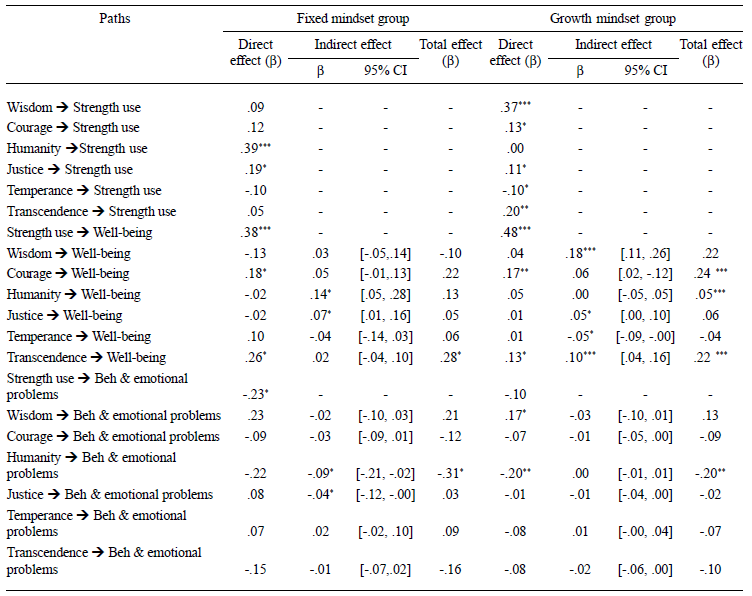
Note. ***p < .001, **p < .01, *p < .05
Figure 3
Statistical diagram of the moderated-mediation model
Discussion
The present study aimed to examine a moderated- mediation model about how character strengths influence adolescents’ mental health specifically well- being and emotional/behavioral problems through mediating role of strength use while being moderated by their mindset. These findings have not only supported the hypothesized model of moderated mediation but has generated meaningful insights into the mechanisms through which character strengths can act as a protective and promotive factor for adolescents’ mental health in Pakistani context.
The demographic profile of the participants (as shown in table 1.) in our study predominantly reflected urban, educated, ethnically diverse and middle-class population of twin cities which integrated the traditional features and evolving dynamics of family and school systems because of urbanization in Pakistani context (PBR, 2023). These sample characteristics enhanced the applicability and generalizability of the findings along with meaningful understanding of mental health among adolescents on varied social and educational context in Pakistan. Preliminary analysis of the data revealed that there is some association among adolescent and familial related demographic factors (such as age, class, family system, ethnicity, mother age and parent availability status) with the mental health outcomes (see table 2.). However, these associations did not contribute substantially in comparison to strength- related variables. This underscores the significance of promoting and nurturing the proximal factors such as strengths; strengths use and strength-based mindset to enhance their contribution towards mental health outcomes among adolescents.
The results from multigroup path analysis revealed that strengths use significantly mediated the relationship between character strengths and virtues (specifically wisdom, transcendence, temperance, justice, and humanity) and mental health outcomes, with distinct patterns across both strength-based mindset groups (see table 3.). These results are aligned with the existing literature on effectiveness of strengths use (Douglass & Duffy, 2015; Lavy 2020; Niemiec, 2023) highlighting the importance of looking beyond awareness of these strengths. As per findings of the study, strengths use emerged as a consistent significant mediator for character strengths and adolescents’ mental health; though its manifestation is dependent on the fixed vs growth mindset of adolescents indicating underlying mechanism through which they internalize and apply their strengths in their daily life.
Notably, among adolescents with a growth mindset, character strengths such as wisdom, courage, and transcendence significantly predicted strength use, which in turn strongly predicted well-being (see Table 3.). This is in line with the broader strengths- based framework which suggests that developmental assets like virtues foster well-being when they are intentionally used in everyday contexts (Wood et al., 2011; White & Waters, 2015). An interesting pattern was observed in the fixed mindset group where strengths use, even being lower, played a meaningful role in reducing emotional and behavioral difficulties, especially when driven by interpersonal related strengths such as humanity and justice. This suggests that adolescents who believe their strengths are fixed may still experience emotional relief when they draw on socially valued virtues, even if they are not actively trying to develop or expand these capacities. These results underscore the critical role of both intrapersonal and contextual psychological assets in adolescent mental health, consistent with the tenets of positive youth development (PYD; Lerner et al., 2020) and the social-ecological framework (Bronfenbrenner & Morris, 2006).
Consistent with earlier findings (Jach et al., 2018; Shoshani & Slone, 2020), adolescents having a growth mindset showed greater tendency to apply core virtues like wisdom and transcendence, likely due to underlying belief in their growth and change. On other end, adolescents with fixed mindset, however, benefited more from virtues like humanity and justice, aligning with the notion that interpersonally oriented virtues can act as a compensatory mechanism in fixed outlooks (Harzer & Ruch, 2015; Xiou & Lui, 2025). The stronger negative impact of strength use on internalizing and externalizing problems in fixed mindset youth suggests that behavioral regulation with help of strengths can act as a coping strategy even under constraints. A possible explanation of these findings lies in the predominant collectivistic values in the Pakistani context (Hofstede Insights, 2023). The significant role of interpersonal virtues such as humanity and justice in the fixed mindset group shows that others-oriented strengths can act as protective mechanism in predominantly collectivistic cultures. These results extend the growing evidence on culturally informed intervention research by showing that some globally recognized virtues (Wisdom) while other context dependent virtues (Justice) can enhance adolescent mental health (Rashid & Seligman, 2018). Moreover, these findings suggest that strengths, their use and influence on mental health outcomes, are guided by underlying beliefs about these strengths, which can influence the significance and direction of these protective aspects. These patterns highlight that the existing interventions for character strengths and strengths use can be applicable in this context but their effectiveness for Pakistani adolescents can further be enhanced through including components about mindset-based interventions.
Practical implications
The study findings hold significant implications for future research, policy making and intervention science. The current study highlights the importance of introducing strength-based interventions specifically for the adolescents in Pakistani context to prevent mental health problems and promote their well-being. The study further suggests that character education is not limited to identification, rather is required to move beyond awareness to active application in daily life. Schools can be used as central points to raise awareness among adolescents and their families to implement such strategies in daily life. Moreover, mindset-based interventions can be incorporated to foster beliefs in the malleability of strengths, thereby increasing the likelihood that use and application of these strengths among adolescents is intentional. Targeted support for adolescents with a fixed mindset may include interventions emphasizing interpersonal strengths (e.g., humanity, justice) as pathways to mental outcomes. These findings show that support to adolescents can be provided within family, especially by parents and in schools to promote the pattern of strengths and their use by considering unique needs of adolescents based on their mindsets.
Limitations & recommendation
Though this study has generated meaningful insights about the underlying pathways of strengths towards mental health outcomes among Pakistani adolescents, it has some inherent limitations. The causal interpretation of this study may be limited due to its cross sectional-design. Longitudinal and experimental studies are further needed to establish the directionality and causality of these effects. The role of distal factors including parents, school and/or teachers could be explored further to enrich insights into the contribution of interpersonal factors in strength development and mental health outcomes.
Conclusion
This study offers compelling evidence about contribution of character strengths in enhancing adolescent mental health outcomes not merely by its presence rather by active use in everyday life, especially in context of underlying mindset towards these strengths. By explaining the role of core virtues in well-being and overall behavioral problems across mindset groups, this research contributes to existing evidence base by enriching theoretical understanding on one end and applicability of strength-based interventions on the other. Henceforth, it lays a foundation for future intervention research in terms of applicability, implementation and adaptation in diverse contexts and populations.
Conflict of interest
There is no conflict of interest.
Declaration
Artificial intelligence has been used to translate abstract and title into Spanish and for proof reading and grammar check.
Ethical responsibility
We sought ethical approval for conducting this study from institutional review board of our affiliated institution (Letter No: 0988/Ethic/01/S3H/112/DBS; Dated 08 May 2023). We sought parental verbal consent and adolescent’s written assent for participation in this study. Limits of confidentiality were shared, anonymity of the data was ensured, and the participants had all the right to withdraw at any stage of this study. Lastly, we share referral for a free counseling helpline for psychological support if needed by them due to any distress (if any) caused by the study.
Authorship contributions
AR: Conceptualization of the study, designing methodology, coordinating, selecting and adapting instruments of the study, conducting data collection, data entry, analysis and interpretation. drafting and revising the research paper.
TAM: Conceptualization of the study, designing methodology, data interpretation, revision and supervision of the research process and paper.
References
Ali, S. B., Ahmad, M. J., Ramzan, I., Ali, M., & Khan, K. (2022). Exploring the nexus between mindfulness, gratitude, and wellbeing among youth with the mediating role of hopefulness: A South Asian perspective. Frontiers in Psychology, 13, 915667. https://doi.org/10.3389/fpsyg.2022.915667
Anjum, A., & Amjad, N. (2020). Values in Action Inventory of Strengths (VIA-IS): Translation and validation in Urdu language. Pakistan Journal of Psychological Research, 35(1), 163-189. https://doi.org/10.33824/PJPR.2020.35.1.10
Biswas-Diener, R., Kashdan, T. B., & Minhas, G. (2011). A dynamic approach to psychological strength development and intervention. The Journal of Positive Psychology, 6(2), 106-118. https://doi.org/10.1080/17439760.2010.545429
Blasco-Belled, A. (2022). Character strengths and mental health as complex systems: A network analysis to identify bridge strengths. Current Psychology: A Journal for Diverse Perspectives on Diverse Psychological Issues, 42, 25832-25842. https://doi.org/10.1007/s12144-022-03598-7
Bronfenbrenner, U., & Morris, P. A. (2006). The Bioecological Model of Human Development. In R. M. Lerner & W. Damon (Eds.), Handbook of child psychology: Theoretical models of human development (6th ed., pp. 793-828). John Wiley & Sons, Inc.
Brown, M., Blanchard, T., & McGrath, R. E. (2020). Differences in self-reported character strengths across adolescence. Journal of Adolescence, 79(1), 1-10. https://doi.org/10.1016/j.adolescence.2019.12.008
Bryman, A. (2016). Social Research Methods (5th ed.).Oxford University Press.
Buchanan, C. M., Romer, D., Wray-Lake, L., & Butler- Barnes, S. T. (2023). Adolescent storm and stress: A 21st Century evaluation. Frontiers in Psychology, 14, https://doi.org/10.3389/fpsyg.2023.1257641
Charabin, E., Climie, E. A., Miller, C., Jelinkova, K., & Wilkins, J. (2023). «I am doing okay»: Strengths and resilience of children with and without ADHD. Journal of Attention Disorders, 27(9), 1009-1019. https://doi.org/10.1177/10870547231167512
Cheng, X., Xu, S., Huang, Y., Qin, C., Liu, K., Tian, M., Liao, X., Zhou, X., Xiang, B., Chen, J., & Lei, W. (2022). Initial validation of the Chinese version VIA Youth-96 and age-related changes in character strengths among adolescents. Frontiers in Psychology, 13, 906171. https://doi.org/10.3389/fpsyg.2022.906171
Duan, W., Chen, Z., & Ho, S. M. Y. (2020). Editorial: Positive education: Theory, practice, and evidence. Frontiers in Psychology, 11, 427. https://doi.org/10.3389/fpsyg.2020.00427
Douglass, R. P., & Duffy, R. D. (2015). Strengths use and life satisfaction: A moderated mediation approach. Journal of Happiness Studies, 16(3), 619-632. https://doi.org/10.1007/s10902-014-9525-4
Dweck, C. S. (2006). Mindset: The New Psychology of Success. Random House.
Essau, C. A, Qadir, F., Maqsood, A., Us-Sahar, N., Bukhtawer, N., Ozer, B. U., Pauli, R., & Gilvarry, C. (2017). Factor Structure of the Urdu version of the strengths and difficulties questionnaire in Pakistani adolescents. Acta Psychopathologica, 3(1).https://doi.org/10.4172/2469-6676.100076
Fatima, S., Shahzad, A., Saleem, L., Asad, A., & Amir, E. (2025). Exploring psychosocial effects of societal pressure and expectations on college girls: A qualitative research. Journal of Social Sciences Review, 5(2), 193-202. https://doi.org/10.62843/jssr.v5i2.468
Ghazal, L. (2022). Mental health issues of adolescents in pakistan: A cry for help. Journal of Gandhara Nursing and Allied Health Sciences, 2(2), 1-2. https://doi.org/10.37762/jfinph.75
Goodman, R. (1997). The strengths and difficulties questionnaire: A research note. The Journal of Child Psychology & Psychiatry, 38(5), 581-586. https://doi.org/10.1111/j.1469-7610.1997.tb01545.x
Govindji, R., & Linley, P. A. (2007). Strengths use, self- concordance and well-being: Implications for strengths coaching and coaching psychologists. International Coaching Psychology Review, 2(2), 143-153. https://doi.org/10.53841/bpsicpr.2007.2.2.143
Green, Z. A. (2022). Character strengths intervention for nurturing well being among Pakistan’s university students: A mixed method study. Applied Psychology: Health and Well Being, 14(1), 252-277. https://doi.org/10.1111/aphw.12301
Greenspoon, P. J., & Saklofske, D. H. (2001). Toward an integration of subjective well-being and psychopathology. Social Indicators Research, 54(1), 81-108. https://doi.org/10.1023/A:1007219227883
Gülbahar, E., & Sari, T. (2022). The relationship of character strengths with peer bullying and peer victimization among adolescents. International Journal of Psychology and Educational Studies, 9(3), 589-601. https://doi.org/10.52380/ijpes.2022.9.3.650
Harzer, C., & Ruch, W. (2013). The application of signature character strengths and positive experiences at work. Journal of Happiness Studies, 14(3), 965-983. https://doi.org/10.1007/s10902-012-9364-0
Harzer, C., & Ruch, W. (2015). The relationships of character strengths with coping, work-related stress, and job satisfaction. Frontiers in Psychology, 6, 126544. https://doi.org/10.3389/fpsyg.2015.00165
Hofstede Insights. (2023). Country comparison tools. https://www.theculturefactor.com/country-comparison-tool?countries=pakistan
Iqbal, N., Hassan, B., Jadoon, S., & Ehsen, N. (2021). Association of school engagement, well-being, resilience, and growth mindset among adolescents in high school. Pakistan Journal of Psychological Research, 36(4), 631-644. https://doi.org/10.33824/PJPR.2021.36.4.35
Jach, H. K., Sun, J., Loton, D., Chin, T. C., & Waters, L. E. (2018). Strengths and subjective wellbeing in adolescence: Strength-based parenting and the moderating effect of mindset. Journal of Happiness Studies, 19(2), 567-586. https://doi.org/10.1007/s10902-016-9841-y
Jermann, M., & McGrath, R. E. (2024). Revising the VIA- Youth: I. Development and interrater convergence. The Journal of Positive Psychology, 19(3), 554-565. https://doi.org/10.1080/17439760.2023.2282775
Kern, M. L., Benson, L., Steinberg, E. A., & Steinberg, L. (2016). The EPOCH measure of adolescent well-being. Psychological Assessment, 28(5), 586-597. https://doi.org/10.1037/pas0000201
Khawar, H., Tariq, S., Zahra, H., Afzal, D., Shirazi, U. H., Afzal, S., Hafiz, A., & Ashfaq, A. (2025). Parental emotional abuse and psychological wellbeing among teenagers in Pakistan: Resilience as a moderator. Insights Journal of Life and Social Sciences, 3(3), 248-254. https://doi.org/10.71000/b6psbw31
Lavy, S. (2020). A review of character strengths interventions in twenty-first century schools: Their importance and how they can be fostered. Applied Research in Quality of Life, 15, 573-596. https://doi.org/10.1007/s11482-018-9700-6
Lerner, R. M., Almerigi, J. B., Theokas, C., & Lerner, J.V. (2005). Positive youth development: A view of the issues. Journal of. Early Adolescence, 25, 10-16. https://doi.org/10.1177/0272431604273211
Little, T. D. (2013). Longitudinal structural equation modeling. Guilford Press.
Maurer, M. M., Daukantaite, D., & Hoff, E. (2021). Testing the psychometric properties of the Swedish version of the EPOCH measure of adolescent well-being. PLoS ONE, 16(10), e0259191. https://doi.org/10.1371/journal. pone.0259191
Mayerson, N. H. (2020). The character strengths response: An urgent call to action. Frontiers in Psychology, 11, 560036. https://doi.org/10.3389/fpsyg.2020.02106
Mubashar, T., & Harzer, C. (2023). Are character strengths universal? Evidence from Pakistani context. Pakistan Journal of Psychological Research, 38(3), 391-408. https://doi.org/10.33824/PJPR.2023.38.3.23
Mukhtar, A., Khan, D. S., Malik, J.A., Kamran, M., Aslam, S., Amjad, A. I., & Shahidi, S. (2025). Reducing adolescent aggression and moral disengagement with gratitude practices: An experimental approach. Environment and Social Psychology, 10(7), 3835. https://doi.org/10.59429/esp.v10i7.3835
Niemiec, R. M. (2018). Character strengths interventions: A field guide for practitioners. Hogrefe.
Niemiec, R. M. (2020). Six functions of character strengths for thriving at times of adversity and opportunity: A theoretical perspective. Applied Research in Quality of Life, 15, 551-572. https://doi.org/10.1007/s11482-018-9692-2
Niemiec, R. M. (2023). Finding the golden mean: the overuse, underuse, and optimal use of character strengths. In P. T. P. Wong (Ed.), A second-wave positive psychology in counselling psychology: A paradigm shift (1st ed.). Routledge. https://doi.org/10.4324/9781003370581
Pakistan Bureau of Statistics. (2023). 7th population and housing census: Detailed results. Government of Pakistan. https://www.pbs.gov.pk/wp-content/uploads/2020/07/National-Census-Report-2023.pdf
Panhwar, M., & Malik, M. (2023). Effects of resilience and gratitude on psychological well-being among young adults. Mader e Milat International Journal of Nursing and Allied Sciences, 1(3), 20-28.
Park, N., Peterson, C., & Seligman, M. E. (2006). Character strengths in fifty-four nations and the fifty US states. The Journal of Positive Psychology, 1(3), 118-129. https://doi.org/10.1080/17439760600619567
Peterson, C., & Seligman, M. E. P. (2004). Character strengths and virtues: A handbook and classification. Oxford University Press.
Qadeer, M., Anwar, Z., & Khan, A. (2025). Parental pressure and its impact on students’ mental health. Journal of Applied Linguistics and TESOL (JALT), 8(2), 770-783.
Rafique, A., & Malik, T. A. (2024, October). Unveiling the potential: Analyzing trends of character strengths among Pakistani adolescents [Conference paper]. 9th Multidisciplinary Student Research International Conference (MDSRIC), University of Wah, Wah Cantonment, Pakistan. https://www.uow.edu.pk/ORIC/MDSRIC/Publications/9th%20MDSRIC-172.pdf
Rafique, A., & Malik, T. A. (2024). An adaptation and validation study of strength use scale: Urdu version. International Journal of Psychological and Behavioral Research, 4(2), 63-78. https://doi.org/10.37605/ijpbr.v4i2.4
Ramzan, M., Sattar, J., & Amjad, N. (2022). Character strengths and workplace happiness in university teachers. Competitive Social Science Research Journal, 3(1), 436-447. https://cssrjournal.com/index.php/cssrjournal/article/view/226
Rashid, T., & Seligman, M. P. (2018). Positive psychotherapy: Clinician manual. Oxford University Press. https://doi.org/10.1093/med-psych/9780195325386.001.0001
Rashid, A., & Naz, S. (2023). Impact of character strengths on psychological wellbeing in adolescents with physical disabilities: Examining the mediating effect of psychological distress. Journal of Population Therapeutics and Clinical Pharmacology, 30(19), 1388-1400. https://doi.org/10.53555/jptcp.v30i19.3843
Ratnasari, D. U. (2023). The effect of strength-based parenting, religious commitment, demographic factors mediated by positive affect on students’ character strength. TAZKIYA Journal of Psychology, 11(1), 89-100. https://doi.org/10.15408/tazkiya.v11i1.27728
Saleem, M., Javed, H. A., & Durrani, A. K. (2020). Impact of character strength on life satisfaction of adolescents from Punjab: Moderating role of authoritative parenting style. UW Journal of Social Sciences, 3(2), 28-42. https://doi.org/10.56220/uwjss.v3i2.98
Sedgwick, P. (2014). Cluster Sampling. BMJ British Medical Journal, 348, g1215. https://doi.org/10.1136/bmj.g1215
Seligman, M. E. (2011). Flourish: A visionary new understanding of happiness and well-being. Simon and Schuster.
Shoshani, A., & Slone, M. (2017). Positive education for young children: Effects of a positive psychology intervention for preschool children on subjective well- being and learning behaviors. Frontiers in psychology, 8, 1866. https://doi.org/10.3389/fpsyg.2017.01866
Snow, N. E. (2019). Positive psychology, the classification of character strengths and virtues, and issues of measurement. The Journal of Positive Psychology, 14(1), 20-31. https://doi.org/10.1080/17439760.2018.1528376
Soper, D. S. (2023). A-priori sample size calculator for structural equation models [Software]. https://www.danielsoper.com/statcalc
Solmi, M., Radua, J., Olivola, M., Croce, E., Soardo, L., Salazar de Pablo, G., Shin, J., Kirkbride, J. B., Jones, P., Kim, J. H., Kim, J. Y., Carvalho, A. F., Seeman, M., Correll, C., & Fusar-Poli, P. (2022). Age at onset of mental disorders worldwide: large-scale meta-analysis of 192 epidemiological studies. Molecular Psychiatry, 27(1), 281-295. https://doi.org/10.1038/s41380-021-01161-7
Missouri Department of Mental Health. (s.f.). Moving from a deficit-based to a strengths-based approach to care. https://dmh.mo.gov/media/pdf/moving-deficit-based-strengths-based-approach-care
Vázquez, C., & Chaves, C. (2016). Positive psychology. Encyclopedia of Mental Health, 3, 290-299.
VIA Institute on Character. (n.d.). VIA Assessments. https://www.viacharacter.org/researchers/assessments/via-youth-viayr2
Vohra, M., & Pandey, N. (2020). Relationship of character strengths to influence psychological well-being during adolescence. Indian Journal of Public Health Research & Development, 11(1), 760-765.
Wagner, L., & Ruch, W. (2023). Displaying character strengths in behavior is related to well-being and achievement at school: Evidence from between- and within-person analyses. The Journal of Positive Psychology, 18(3), 460-480. https://doi.org/10.1080/17439760.2022.2109196
Walker, D. I., Gungordu, N., & Nabizadehchianeh, G. (2023). The role of character strengths on adolescents’ participation in sports. Journal of Psychology and Psychotherapy Research, 10, 22-31. https://doi.org/10.12974/2313-1047.2023.10.03
Wood, A. M., Linley, P. A., Maltby, J., Kashdan, T. B., & Hurling, R. (2011). Using personal and psychological strengths leads to increases in well-being over time: A longitudinal study and the development of the strengths use questionnaire. Personality and Individual Differences, 50(1), 15-19. https://doi.org/10.1016/j.paid.2010.08.004
White, M. A., & Waters, L. E. (2015). A case study of ‘The good school:’ Examples of the use of Peterson’s strengths-based approach with students. The Journal of Positive Psychology, 10(1), 69-76. https://doi.org/10.1080/17439760.2014.920408
Yeager, D. S., & Dweck, C. S. (2020). What can be learned from growth mindset controversies? American Psychologist, 75(9), 1269-1284. https://doi.org/10.1037/amp0000794
Zeng, G., & Kern, M. L. (2019). The Chinese EPOCH Measure of adolescent wellbeing: Further testing of the psychometrics of the measure. Frontiers in Psychology, 10(1457). https://doi.org/10.3389/fpsyg.2019.01457
Zhang, Y., & Chen, M. (2018). Character strengths, strengths use, future self-continuity and subjective well-being among Chinese university students. Frontiers in Psychology, 9, 1040. https://doi.org/10.3389/fpsyg.2018.01040
Zubair, A., Kamal, A., & Artemeva, V. (2018). Gender differences in character strengths, social competence, and peer relations among Pakistani and Russian university students. Pakistan Journal of Psychological Research, 33(2), 607-626. https://pjpr.scione.com/cms/abstract.php?id=152
Anam Rafique
MS in Clinical Psychology and PhD Psychology. Her research interests include positive psychology, developmental psychology, and clinical psychology.
Tamkeen Ashraf Malik
PhD in Developmental Psychopathology and Postdoctoral training in Child Clinical Psychology. Her research interests focus on developmental psychopathology and intervention research.
© Los autores. Este es un artículo Open Access publicado bajo la licencia Creative Commons Atribución 4.0 Internacional (CC-BY 4.0).